
July 30, 2016 Sandy Robson
Anyone wondering what is going on with SSA Marine/Pacific International Holdings/Pacific International Terminals’ suspension of the EIS for Gateway Pacific Terminal? Continue reading

July 30, 2016 Sandy Robson
Anyone wondering what is going on with SSA Marine/Pacific International Holdings/Pacific International Terminals’ suspension of the EIS for Gateway Pacific Terminal? Continue reading
23 mins July 25, 2016 Sandy Robson
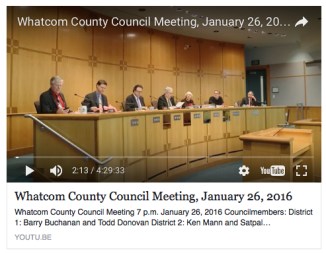
January 26, 2016. Remember that date because that is the day that the general public, the Lummi Nation, the Suquamish Indian Tribe, the Swinomish Indian Tribal Community and Tulalip Tribes (which submitted Comp Plan Update comments on Cherry Point UGA), and our County Council, were stopped from fully participating, or even participating at any acceptable level, in the County Comp Plan Update process as it relates to Cherry Point UGA. Continue reading

July 22, 2016 Dena Jensen
Dear Whatcom County Council:
I have been involved for 5 years in working in opposition to projects at Cherry Point that do or will adversely affect the air, lands, waters, life forms, and/or cultural and spiritual resources located there or the treaty rights of affected tribes, which in turn have or will have an adverse effect on the rest of our region. The only question has ever been, whether those adverse effects can be lightened to some degree acceptable to either the Lummi and Nooksack Nations or the majority of people in our community. Continue reading

Bob Watters’ testimony at the July 12, 2016 County Council Special Committee of the Whole meeting
SSA Marine’s Sr. VP Bob Watters, was allowed to give public testimony at the July 12, 2016 County Council Special Committee of the Whole (SCOTW) meeting during the public comment session. Continue reading
 Wednesday, May 11, 2016 Tim Johnson
‘WE DRAW THE LINE’: In a perfect storm of colliding media fronts, the story of the year was eclipsed by the story of the decade in a way that can perhaps only be understood as it unfolds in the story of the (new) century. Continue reading

The long, long coal train has come to a halt.
Years ago, Lummi Nation declared Kwel Hoy’!, “We Draw the Line,” and vowed the coal trains would not unload at their fishing grounds and sacred burial site, Xwe’chieXen. They called upon the federal government to honor its treaty to protect those heritage assets. […] Continue reading

Wednesday, April 27, 2016 Tim Johnson
FIVE FAVOR FIVE: The Gristle was optimistic in thinking there would be consensus in the effort to draw five new voting districts for Whatcom County elections. […] Continue reading
April 11, 2016 Jay Taber
In July 1974, the year U. S. District Court Judge George Boldt ruled on the American Indian treaty fishing rights case United States v. Washington – commonly known as the Boldt Decision – I was a cannery tender captain, buying salmon for Port Chatham Packing Company of Seattle, owned at the time by a pair of Norwegian brothers named Norman and Erling Nielsen.

If only our own port commissioners cared about Cherry Point herring as much as the new port commissioner in Seattle. Thanks, Fred. Continue reading

Below, are some of the campaign contributions from Gateway Pacific Terminal (GPT) interests donated to Congressman Rick Larsen’s campaigns: Continue reading
 noisy waters northwest
You must be logged in to post a comment.