
August 4, 2023 Dena Jensen
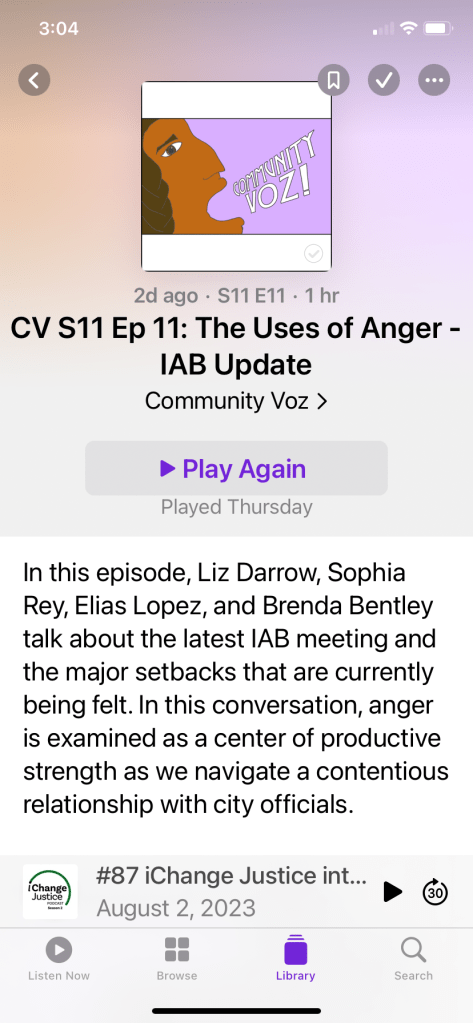
I listened to this great episode of the Community Voz podcast yesterday that brings up such valuable points related to oppressed and marginalized communities. Here is the link where you can find the episode “The Uses of Anger – IAB Update”: https://www.foodjustice.org/community-voz-radio
“Maybe it sounds mean
— Sinead O’Conner, The Emperor’s New Clothes
But I really don’t think so
You asked for the truth and I told you”
Immigrants, BIPOC and/or LGBTQ+ community members, people without shelter – all of them are suffering systemic threats to their lives – to their health, welfare, and literally to being alive – daily in Whatcom County. At the same time, our government officials struggle to comprehend the level of frustration, anger, and despair that comes with that and how those responses can actually be of help to those in power toward finding ways to clear pathways of racial, cultural, sexual, and class discrimination and persecution.
I watched the July 18,2023 Bellingham Immigration Advisory Board meeting that was attended by, among board members and others, Bellingham City Council Member Skip Williams and current City of Bellingham Interim Deputy Administrator Janice Keller. (Link to the meeting recording.)
The beginning hour of the meeting was taken up by a failure to communicate in a timely and trust-building manner by the Mayor’s office about his decision to reject a board-recommended reappointment to the IAB.
Following this challenge, during the second hour there was a discussion about the Request For Proposal (RFP) process (ongoing at that date) for a consultant to assess components needed for an Immigrant Resource Center.
The concern was raised by board members about a potential for City-preferred consultants having an advantage in the process.
Council Member Williams indicated that he perceived that the RFP goes out to the public and then anyone in the world could submit a proposal and that it seemed that there was “no preferred anybody.”
IAB Board Member Sophia Rey responded that it wasn’t that simple.
The process is not reasonably accessible to people speaking any language except English. People have to already be aware of the City of Bellingham portal to find RFPs, or be intentionally sent a link that alerts them to the RFP and allows them to sign in to view the proposal and interact with the City.
Deputy Administrator Keller then recounted numerous times she had shared the link to the portal with certain networks she was aware of and had sent it to the IAB, urging them to share it with their networks.
She added: “I hope you shared it. If you haven’t, and you think there’s still time, please share it. If you’d like to extend the deadline again, so that we can get it out further. Happy to do that. Like you, I want – I want as many applicants as possible.”
IAB Board Member Tara Villalba then spoke up:
“What I want to reiterate here is that it kind of addresses what Council Member Williams was saying, that, you know, anybody in the world can access this. And what we’re trying to say is that there is a built-in exclusion – like this systemic exclusion that is built into this process. That’s what we’re trying to say, and that, you know, while the city staff might say there is no preference, the preference is built into the process. That’s what we’re trying to say. And we’re working with a process that has built-in exclusions and built-in preferences.
“And if we could just even just get the city to understand that that is what we’re trying to say. This is not an accusation against any particular person – but that this process is already exclusionary and discriminatory because of the built-in ability to access or not access it through language, through the portal, through who the networks are, through who the people are that know the networks like this. It’s just – it’s a systems thing. And nobody has to do anything in particular to screen out specific groups of people. That’s what we’re trying to say.”
What stood out to me, and yet at the same time was sadly familiar, was the unawareness expressed by government officials at the meeting of the ways in which they are asking the people belonging to communities which are marginalized and mistreated to additionally bear the burden of largely being the ones to mitigate the damaging aspects of the government’s policies and resources that discriminate against them.
You have one official who doesn’t appear to conceive of how the system itself is somehow preferential to English-speaking professionals. Then there is another official who doesn’t seem yet able to recognize that telling people she has repeatedly offered additional responsibility to negatively impacted community members to help mitigate the discrimination against them is only going to contribute more to the sense of burden and unjustified expectations.
Although there was frustration and disappointment that was evident to me, I didn’t witness anyone showing anger in that meeting, however I know that often it takes the energy of anger to help people rise and continue to participate in a process that time after time seems stacked against them.
On one occasion some months back, I heard a Bellingham City Council Member actually refer members of the Immigration Advisory Board to the Racial Equity Commission (REC) – which was not yet officially operating – urging them to get advice on how to proceed in their pursuit of an Immigrant Resource Center based on what an exemplary organizational model they felt the REC had developed.
But one thing I have noticed in presentations to government officials by members of the Racial Equity Commission is that their presenters acknowledge the disagreements and debating that goes on in their processes, and the criticism their members receive within that organizational body. It is after such internal processes, so far, that they have come with upbeat and inspirational descriptions of their vision, values, and goals that they hope will be embraced and pursued in future collaboration with government agencies.
Officials who are upholding current discriminatory systems being insulated from any anger or accountability on an ongoing basis doesn’t seem sustainable, or even effective in achieving the justice each community member deserves and the life-saving measures that are necessary. Likewise, it does no good for those officials to further try to marginalize and create adversaries of those who speak out in pain about the injustices they suffer. Anger only subsides when trust and well-being increase.
 noisy waters northwest
You must be logged in to post a comment.