
September 18, 2023 Dena Jensen
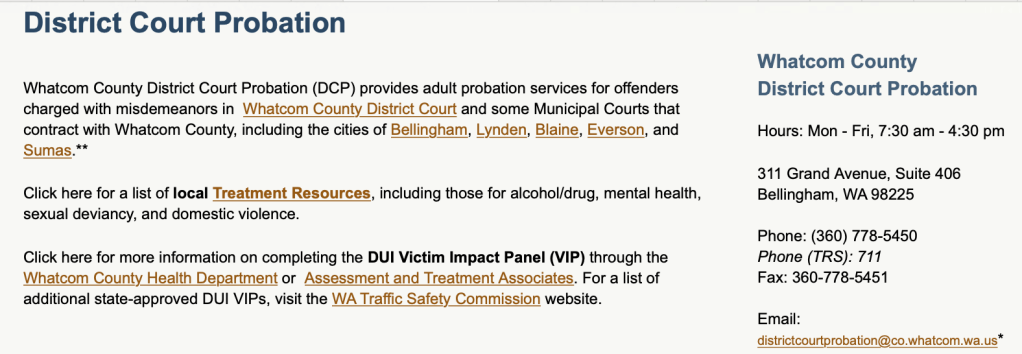
At their September 12, 2023 Criminal Justice and Public Safety Committee meeting, committee members Barry Buchanan and Carol Frazey, along with County Council Member Kailey Galloway received a report from District Court Probation. Notes from the report using language that is fairly close to that used by presenters are included further down in this blog post.
This was a very upbeat sounding presentation, even when the three court officials present were talking about conditions that have caused courts to be “jammed up.” There was no suggestion that the officials were concerned about these conditions or any explanation of ways they were working to address them.
It’s notable and a little concerning that along with the very positive vibe of the presentation, there was an amplification of how compassionate County District Court probation officers are and how those taking part in diversion services are enthusiastic about them to the degree that, for example, those seeking to get into alcohol recovery programs ask to not have their ankle monitors removed because it helps them remain sober while they are waiting. No remarks were made to indicate to what degree this is not the case.
Part of why I bring this up is because the presentation was very similar to the tone of the Bellingham’s City Prosecutor Ryan Anderson’s presentation on Washington State’s new drug laws to Bellingham City Council Committee of the Whole members during their June 26, 2023 meeting. Numerous local officials lately, including Bellingham City Council Members themselves have been eager to express that they have a high level of compassion and how bright they see the future as being as they begin the process to take more substance-use-related legal action against community members.
I am happy to hear about this compassion and investment in the positive outcomes for those community members interacting with District Court Probation, along with the increase in staff devoted to Mental Health Court. However, I don’t know if it’s possible at this point to discern if the claims are playing out to community members in the same warm and cheery way. Let’s work to help ensure that’s the case.
Meanwhile, here’s a quote of District Court Presiding Judge Angela Anderson’s from the presentation that I thought should be considered in broader terms than either Judge Anderson or any of the Council Members did on September 12:
“And these programs that probation’s running – what’s so great about the MRT programs, you develop a community, and you start to want to show up for the people in your group and they hold each other accountable, almost better than, like, I can.”
This was after some remarks from Judge Anderson about how they are avoiding lag situations and people struggling with substance use can be quickly delivered to treatment while they are motivated to receive it. It made me wonder how much work is being done outside the legal system to eliminate barriers to treatment being received in this same prompt and accessible manner.
One other item to point out is that with the County’s Mental Health Court adding 2 additional probation officers they are already almost at capacity with 30+ participants.
Below are my notes on the report:
Probation Administrator Bruce Van Glubt led off with voicing strong appreciation for the County Council writing a letter to the Administrative Office of the Courts (AOC) supporting the application that was sent – presumably to request funding, but that was not stated outright during the presentation.
According to Van Glubt, the $190,000.00 that came as a result of the letter and application will go directly to support the Mental Health Court and District Court, allowing them to get a probation officer that will be focused on the therapeutic court, allow additional substance testing, and get some good training for the staff in the area of behavioral health.
Van Glubt then handed off the presentation to Jake Wiebusch, the District Court Probation Department Manager.
*************************
Wiebusch said that a lot of probation officers continue to supervise a lot of DUI-related and domestic violence component cases, which are the bulk of their referrals. They continue to offer many specialized case loads which focus on higher-risk individuals who are often struggling with resources available. Those units usually have increased reporting requirements.
The Behavioral Health Unit is currently growing. They have 2 probation staff working in that unit and there will soon be a third, which Van Glubt had mentioned at the beginning of the presentation.
Probation officers are highly involved in community resources and engaging those clients with those resources. They are also participating and contributing with Bellingham’s Mental Health Court as well as the County’s Mental Health Court through their District Court, run by Presiding Judge Angela Anderson.
Mental Health Court is also seeing some significant growth in this past year. This past June they received the funds from AOC to grow their department’s involvement to help both the City and County’s Mental Health Court.
They continue to provide a high-risk domestic violence unit that consists of two probation officers supervising both pre-trial and post-conviction cases. Often the focus of that unit is finding ways for DV treatment to be successful for their clients.
In the last couple years Judge Anderson has implemented the Family Justice Court and these probation officers are involved heavily with that. Family Justice Court has a domestic violence review calendar offered every three weeks for either felony reductions or cases that involve the DVPOTS program, which is a funding program.
There also continues to be a pre-trial unit for pending cases that is designated to one probation officer.
In an effort to address a lot of the gaps in the community, the focus in the probation department has been to work on the programming within the department to help clients be successful.
DVPOTS, or Domestic Violence Perpetrator for Opportunity Treatment, was implemented a couple of years ago, to continue to facilitate reimbursement for treatment services for indigent clients. So they facilitate those funds with a contracted agency in Whatcom County.
They have seen just short of 70 folks enrolled in that. 30 of those are involved currently. They’ve had some challenges. A couple agencies have closed. They’ve had a new one come this last year, with some success there. Family Justice Court was created to help enhance that accountability with judicial involvement.
They continue to have in-house domestic violence – DV-MRT (Domestic Violence Moral Reconation Therapy)- offered to all the courts as an added and alternative resource to domestic violence treatment. There art two groups currently running that consist of an evidence-based 24 step workbook that they work their way through. They currently have 88 people going through the program with 16 currently active with no cost to the client.
They also run a standard MRT program, recently within the last year and a half, which also has an evidence-based workbook with 12 steps to address to address criminal-thinking behaviors. Usually this is used in lieu of a jail sanction with a class that they attend on a weekly basis and run by probation staff.
They have implemented an anger-management program with a similar 8 week process for non-domestic-violence cases.
They continue to work with the Jail Alternatives in the successful electric equipment program. There is alcohol monitoring – either transdermal, or Soberlink which is a portable breath test. To date, they have had over 300 individuals on one of those units and the program has seen some increased usage in 2023.
In May, June, and July of 2022 they averaged about 31 individuals at any given time during those months. This past year for those same months, they’ve seen an increase of up to about 40-46 average of individuals at any given time. They see a balance of 50% pre-trial cases with bracelets or breath tests are used, or about 50% on post-conviction cases.
They continue to provide a lot of text messaging to a majority of the courts in Whatcom County related to court appearances, as well as for probation appointments.
*******
At this point Weibush handed off to Judge Angela Anderson.
She wants to tell Council how proud they should be of their probation department up in District Court. The compassion that she sees from the probation officers is outstanding. We have a lot of issues in the community right now between Fentanyl and mental health issues. The kindness and compassion she sees from the probation officers cannot be overstated. It’s really a push to try to find help for people because Fentanyl right now is so deadly. And they’ve lost a lot of members of the District Court community when they’re being monitored by probation and they are really pushing for getting them to triage. So you’re seeing a lot of creative problem-solving coming from the probation team. She could not be more proud.
They’re programs are doing very well. The Family Justice Court (FJC), it’s so exciting to hear – mostly men – but gentlemen come in and say “I’ve completed a program.” And that’s so rare for them. They get to come in and show her their certificate. And “I’m getting to see my kids on the weekend because my family trusts me because I’m doing so well.”
The Soberlink and the tag device are ways that people can remain sober while trying to get into recovery. We have individuals all the time that say “you know what? I don’t want you to take the ankle monitor off me. I want to keep it on because this is the first time I’ve been clean in a long time.”
And then I can’t be more proud of my Mental Health Court. We’ve tripled since I’ve taken the bench. We’re almost at capacity at 30+ participants. We’re really busy and doing great things for the community.
Again, she cannot express how much Council Members should be so thrilled with all that District Court Probation is doing. They’re doing amazing things.
*******
Council Chair Barry Buchanan said the report made his day.
**********
Council Member Frazey said it was great to hear that Mental Health Court has tripled [to three probation officers] . She asked that with domestic violence programs and the text messaging done related to appointments is District Court seeing less reoccurrence/less people coming back and also are people showing up for their probation meetings? What outcomes are being seen and is there a big difference?
***********
Wiebusch answered that with text messaging the increase of appointments made is significant as well as court appearances. Bruce, at some point, had looked into more detail on that.
As far as the DV treatment, some further stats is something the probation office will be looking at going forward. It’s definitely encouraging, especially the ones that are seen in-house, to see that change happening. As probation officers they engage with them a lot, but also to have that treatment component in front of them where you can see that change with the judicial involvement, it really makes an impact. It really takes it to another level: “Is this for real?” – ” I need to make these changes?” – “A lot of people are keeping an eye on me.”
************
Judge Anderson said it’s one of those things where they are removing a barrier. There’s a lot of excuses about not being able to do treatment because: “I can’t afford it” – “I can’t find it” – “They’re not returning my calls.”
It’s great to be able to go, “We’re gonna put you in this program. You’re going right down the hall and we’ll set your first class right away.” And that gets rid of all of that lag. So when they’re motivated for change, you’ve got to grab them. And it seems to really be working.
“And these programs that probation’s running – what’s so great about the MRT programs, you develop a community, and you start to want to show up for the people in your group and they hold each other accountable, almost better than, like, I can.”
This internal program, she just can’t rave about it enough because the probation has the oversight, but again they’re trying to help each other. And that’s exactly what we want to see happen.
***************
Wiebusch said that they as probation staff are just facilitating it, and honestly, just kind of turn it over to them and let them kind of use each other to hold the accountability.
************
Council Member Frazey said she likes the hand-holding and then setting up right then because that’s such a barrier, that little step right there.
**************
Council Member Galloway said maybe this is more of a Superior Court than a District Court issue, but Council Members hear a lot about backlogs, and the pandemic really made things a lot more difficult. She was wondering if those presenting were feeling any backlogs in District Court or if they have worked through them, and if folks were getting in and out in a timely manner.
***********
Judge Anderson said she could offer the District Court view and then Jake Wiebusch could offer a probation view.
She feels like some of the post-pandemic stuff really hit them, for whatever reason, at the start of 2023. She has had more trials already this year than she did last year. She feels like she was at trial almost every week. That’s cooled down just a little bit recently.
But they’re not the old cases. She thinks that people are just back in action again and meeting with their clients and getting to trial. So it’s not like they’re cases from 2019. They’re newer charges.
She thinks they are clearing out the backlog of people who had been on pre-trial monitoring for months and months without a plea resolution. She thinks they’re taking care of those cases. It’s really the public defender and prosecutor who have to get together to resolve all of them. She is there to take a plea anytime.
She still thinks there’s some backlog, but she doesn’t think they’re super overwhelmed by it.
**************
Wiebusch said the probation department has seen, from the end of last year into this year, an increase in their referrals coming back out of COVID. As far as the court, he doesn’t have any further information on the backlog.
*******************
Van Glubt said he thinks Judge Anderson pretty much covered it with her comments. Where they are really seeing their increase in workload in the court is in two areas. One is they are running more trials this year than any other time he remembers. The other is the protection order process is hugely time consuming. It has changed significantly.
He was talking with Dave Reynolds [Superior Court Administrator] and they are seeing the same thing. So the level of work it takes to keep it going has increased quite a bit. But he wouldn’t necessarily say it’s because of a backlog. It’s because of legislative changes that have been made regarding how different kind of orders are processed.
*****************
Judge Anderson said she always forgets, because they’re focus is all so criminal – the anti-harassment orders and protections orders had a big increase. For some reason they go way up in the summer and then cool down a little. But they were running a lot of protection order hearings.
There were a lot of small claims cases. They’ve had to bring in a pro tem to handle small claims on a special set calendar because they have so many. Right now, if someone were to file a small claim they would get a December court date.
So that’s probably, to her, the court that feels the most jammed up, but it’s not a backlog from COVID. It’s just the business they are in. With small claims she chalks that up to being a good thing that people are finding a civil way to handle their disputes with their neighbors instead of just duking it out. They are trying to accommodate those cases creatively.
Following this, the meeting was adjourned.
 noisy waters northwest
You must be logged in to post a comment.